Myth vs. Fact
If Your Sand Dollar Is Fuzzy, Put It Back
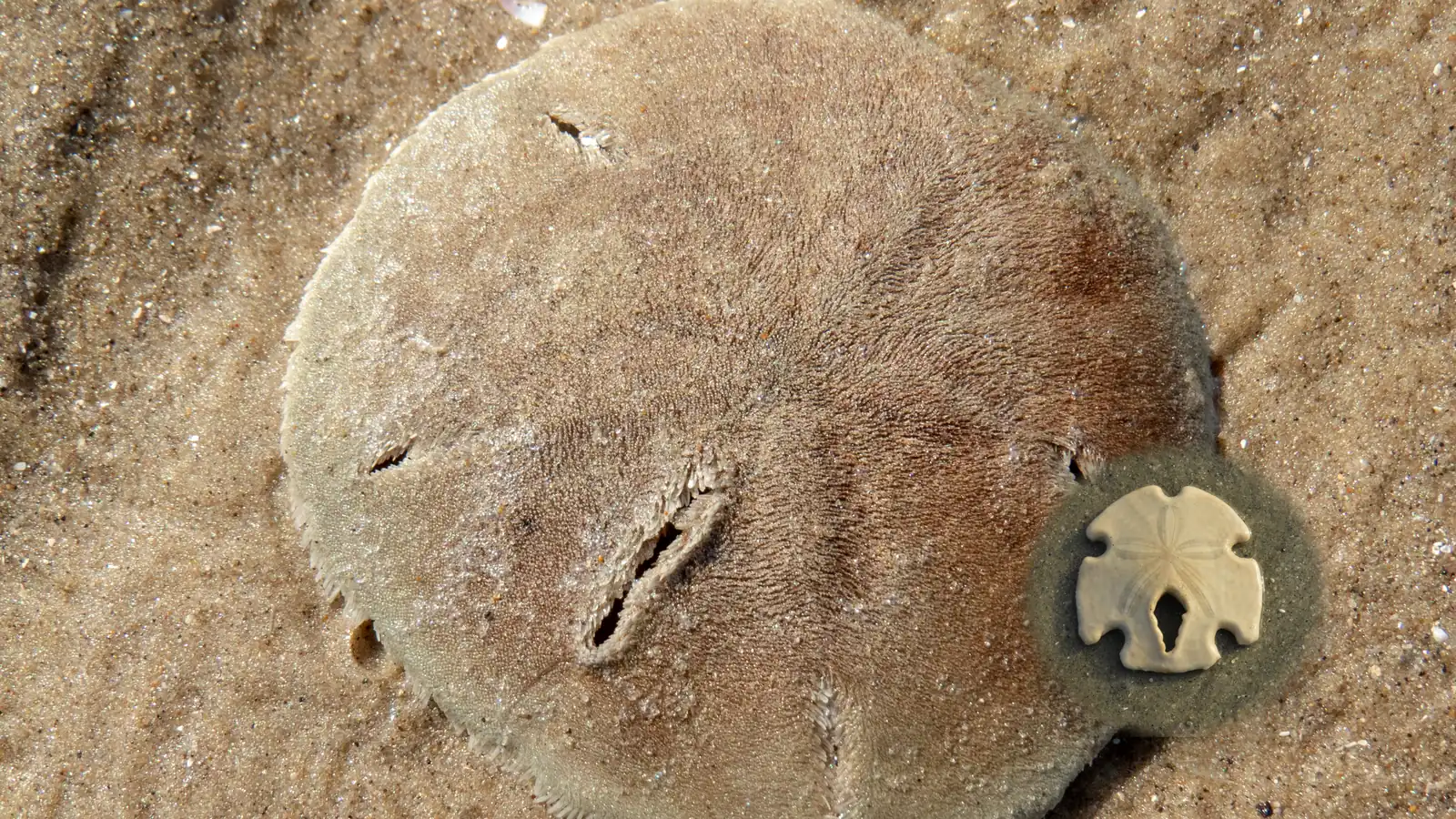
Live sand dollars on Anna Maria are brown and fuzzy, not postcard-white. In Manatee County, FWC caps live shells at two per species per day — and yes, you need a saltwater fishing license.
Somebody always scoops up a brown, fuzzy disc on Coquina Beach and announces they’ve found “a sand dollar that hasn’t bleached yet.” Friends, that is not a tan. That is a roommate.
Myth: the white ones are sunbathing
Fact: the white, smooth sand dollars on Anna Maria’s sandbars are already retired. Per AMI Sun’s shelling rundown, live ones are brown and fuzzy; the postcard-white discs are empty skeletons. Live starfish flex. Dead ones don’t. Nature’s quality-control system is oddly polite about this.
Myth: pocket whatever you find
Fact: according to the Florida Fish and Wildlife Conservation Commission, a Florida recreational saltwater fishing license is required to harvest any shell that still has a living organism in it — even from shore. And in Manatee County (yes, that includes Anna Maria Island), you may not take more than two shells containing live organisms of any single species per day. Sand dollars and starfish count. Empty shells do not.
So the soft opening for beachcombing this week is simple: hunt the tide line at Coquina, Bean Point or Holmes Beach, keep the white souvenirs if you must, and leave the fuzzy neighbors to keep making more fuzzy neighbors. Your mantel will survive. The flats will thank you.
I’ll be the one walking past with empty pockets and a full thermos, pretending the low tide was my idea.
— Sandy