Sky Watch
The Moon Hid Jupiter Tuesday Morning, and Running Was Finally Worth It
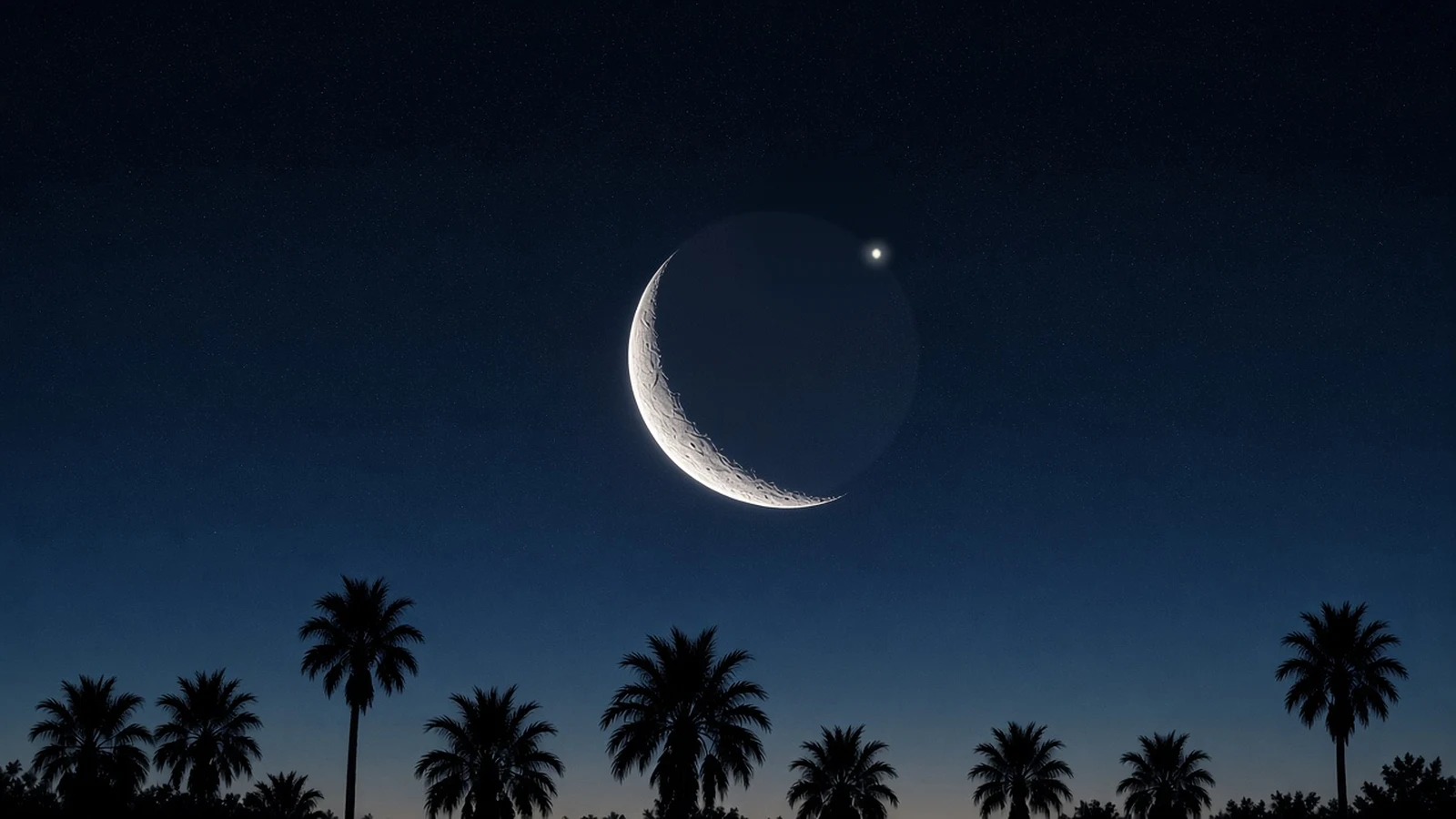
Before sunrise Tuesday, the crescent Moon slid right in front of Jupiter, and Florida had a front-row seat. If you slept through it, here's what you missed and how to catch the next early-morning show.
Nobody runs before dawn in Sarasota because it's fun. You do it because it's the only hour of the day when the air isn't soup.
Tuesday morning I was out on my usual loop, still dark, still muggy, looking up mostly so I wouldn't have to look at my pace. A thin crescent Moon was hanging in the east, and touching its upper-right edge sat a bright, steady dot. Not blinking. Not a plane. Just parked there like it had a reservation.
That was Jupiter. If you missed it Tuesday morning, here's what you slept through.
Down in Key West, @Wintercearig caught it beautifully, with Jupiter parked just off the Moon's dark side:
Moon Jupiter Occultation 2026 from Key West, Florida pic.x.com/HlM0bcOiPY
— Rainbow Harvest (@_Wintercearig_) October 6, 2026
See it on X if the post doesn't load. Gorgeous shot.
What was going on up there
The Moon, about a fifth lit, passed directly in front of Jupiter that morning. Astronomers call that an occultation. Sky & Telescope and Astronomy both called it the main event of the week, visible in darkness across most of the eastern U.S.
Florida was in the zone. The International Occultation Timing Association's predictions for Tampa had Jupiter slipping behind the Moon at about 4:18 a.m. and coming back out around 5:12. So depending on when you laced up, you either caught Jupiter hiding or caught it right back at the Moon's edge, acting like nothing happened.
Joe Rao, writing for Astronomy, says a dark-sky occultation of Jupiter comes around for any one spot about once every 13 years on average. I saw it because my alarm went off at an unreasonable hour and I didn't argue with it.
The whole point
The sky does its best work while everybody's asleep, and the only admission is being awake. No tickets. No parking. No line. Just you, a damp T-shirt and the largest planet in the solar system.
How to catch the next one
- Any clear morning this month: the brightest point in the east before dawn is Jupiter, with fainter, reddish Mars above it, per Sky & Telescope. Sunrise Tuesday was 7:25 a.m. (USNO), so be out by 6:30.
- Orionid meteor shower, night of Oct. 21 to 22: the Moon will be bright, so the dark window is after moonset and before dawn (American Meteor Society, NASA). Those are runner's hours.
- The Hunter's Moon, Oct. 26: full moon per the USNO. We'll have a guide to where to watch it rise.
- The next good Jupiter occultation for most of North America: November 2037, per Astronomy. I'll be slower by then. Still out there.
See you before sunrise. Bring water.